Charles Bonnet Syndrome: Why Am I Having Visual Hallucinations?
Many vision professionals believe that a significant number of adults with various eye conditions, including macular degeneration, diabetic retinopathy, and glaucoma, experience Charles Bonnet (“Bo-NAY”) Syndrome (CBS), a condition that causes vivid, complex, recurring visual hallucinations, usually (but not only) in older adults with later-life vision loss.
It is estimated that as many as 20-30% of adults with low vision are affected by CBS. Actual numbers are difficult to determine, since few people who experience the symptoms are likely to discuss them with family members, friends, or physicians.
To better understand this reluctance, it is helpful to learn the basics about Charles Bonnet Syndrome (CBS), including its causes, symptoms, treatments, and therapies that have shown promise in treating CBS.
Who Was Charles Bonnet?
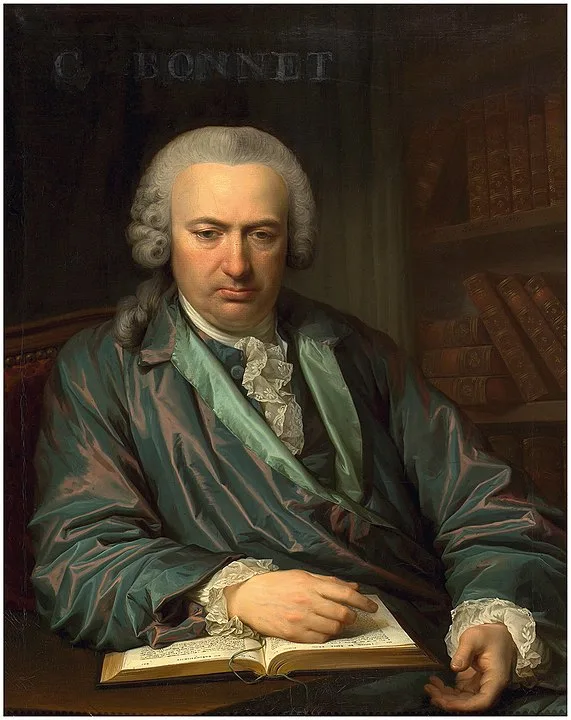
Charles Bonnet (March 13, 1720 – May 20, 1793) was a Swiss naturalist and philosopher and the first person to describe the syndrome.
Initially, he observed symptoms of the syndrome in his 87-year-old grandfather, who was nearly blind from cataracts, yet still “saw” men, women, birds, carriages, buildings, scaffolding, and tapestries before his eyes.
In 1760, Bonnet described this syndrome, documenting a range of complex visual hallucinations in seemingly psychologically intact people.
Charles Bonnet Syndrome: Visual Hallucinations Are My Constant Companions
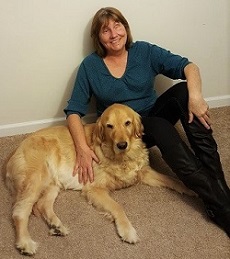
Former VisionAware Peer Advisor Sheila Rousey is an educator, assistive technology specialist, and certified braille transcriber. She also has Marfan syndrome, a congenital connective tissue disorder that can manifest itself in the body in many ways. In Sheila’s case, she was born with cataracts and microphthalmia [i.e., smaller eyes and eye sockets]. After surgery to remove her cataracts, Sheila developed glaucoma and – later on – retinal detachments.
For several years Sheila has experienced Charles Bonnet Syndrome (CBS), a condition that causes vivid, complex, recurrent visual hallucinations, usually (but not exclusively) in adults and older adults with later-life vision loss. Says Sheila, “I am really pleased that the subject of CBS is finding its way into the conversation. Hopefully, the medical community will take a more serious look at the findings and low vision people will no longer only learn of it as a result of shared experiences through support groups.”
What Is Charles Bonnet Syndrome?
Charles Bonnet Syndrome (CBS) is a condition that causes vivid, complex, recurring visual hallucinations, usually (but not only) in older adults with later-life vision loss. It was introduced into the English-speaking psychiatric literature in 1982.
The “visual hallucinations” associated with CBS can range from animated, colorful, dreamlike images to less complex visions of people, animals, vehicles, houses, and similar everyday images.
Hreha et al. (2024) provides several helpful questions that can be asked to distinguish if the hallucinations are related to CBS or delusions:
1) Does the person have low vision from a diagnosed eye disease?
2) Did the images first start appearing after the diagnosis of low vision or vision loss from the eye disease?
3) Once CBS is explained, does the person still believe the images are not real?
If the answer to all three questions is yes, it is likely they have CBS. Often people experiencing CBS are initially reluctant to admit that they are seeing images. However, once the “phantom vision” phenomenon is explained, they are more likely to acknowledge the presence of the images.
Adults with CBS are usually in good mental health and can come to understand that these illusions or “hallucinations” are not sensate or “real.” In addition, the illusions associated with CBS are solely visual and do not occur in conjunction with the other senses (hearing, smell, taste, or touch). People with CBS do not try to interact with the images, which are usually not disturbing.
Charles Bonnet Syndrome is a “diagnosis of exclusion,” which means the diagnosis can be made if there is no other neurological diagnosis to explain the hallucinations. If there are additional problems or symptoms such as memory loss, weakness, epilepsy, brain tumor, migraines, dementia, or signs of mental illness, the person should be referred to a neurologist or other medical professional to rule out other conditions.
What Causes Charles Bonnet Syndrome?
 An image of a blue moose reflected in a window
CBS is sometimes referred to as “phantom vision” syndrome. The Academy of Ophthalmology (AAO) (2025) describes “phantom vision” associated with CBS as follows:
“When people lose vision from diseases like age-related macular degeneration, glaucoma, or diabetic retinopathy, their visual system doesn’t process new images. Without visual data coming in through the eyes, the brain fills the void and makes up images or recalls stored images for you to see. This causes the visual hallucinations of CBS. It is similar to how people who have lost a limb may feel phantom pain and is not a sign of a mental health problem.”
In a National Public Radio story about CBS, ophthalmologist Jonathan Trobe, M.D., from the University of Michigan, explained it this way:
The brain is a mash-up of stored visual memories. When visual cells in the brain stop getting information, which happens when your rods and cones stop working, the cells compensate. If there’s no data coming in, they ‘make up’ images.
Treatment and Management of CBS
In general, physicians do not like to prescribe medications for Charles Bonnet, and there is currently no consensus on what medications may improve symptoms (Mars, et. al., 2025; Jones et al., 2025). Most often, when an individual understands why they are experiencing hallucinations and begins to talk about the images, their anxiety, fear and isolation are reduced. Psychological or counseling may be recommended so that the person experiencing hallucinations can apply relaxation techniques and coping strategies during daily activities. In addition, the hallucinations or images may be triggered by an increase in stress, fatigue or even darkness (Mars et. al., 2025).
Strategies Recommended by the AAO (2025) to Stop or Reduce Hallucinations
- move only the eyes in rapid back-and-forth and up-and-down movements
- close the eyes and then open them
- look away, or walk away, from the images or hallucinations
- stare at, or fixate on, the images
- turn on a light or open the curtains
- change the environment or engage in a different activity
- find a distraction, such as turning on music or the television
Additional Guidance
The Royal National Institute of Blind People (RNIB) in the United Kingdom provides helpful information about CBS hallucinations. These include animals, people, and landscapes, along with tips for coping.
RNIB suggests asking yourself questions when dealing with hallucinations. Is the image too clear or detailed to be real? Another clue is that colors are often vivid in hallucinations. This differs from how you may normally see with vision loss. (Charles Bonnet syndrome | RNIB)
According to Mars et al. (2025), the brain may adjust after 12 to 18 months. As vision declines, hallucinations often begin to recede. Fifteen to thirty percent of people with low vision develop Charles Bonnet syndrome. This includes those with macular degeneration, cataracts, and diabetic retinopathy.
Other eye disorders may also be involved. (Mars et al., 2025; Jones et al., 2025).
Hallucinations are more likely when a person is awake and alone. They often occur in dim light or during physical inactivity. They are also more common when distractions, such as television, are absent.
For many people, reassurance is enough. Knowing they are not becoming mentally ill can help. Understanding that symptoms will eventually subside may be all the treatment needed.
More Information and Resources
By Maureen A. Duffy, M.S., CVRT
Reviewed by Anne T. Riddering, PhD, OTRL, CLVT, COMS, CFPS, Henry Ford Health, Department of Ophthalmology and consultant member of the Academy of Ophthalmology Vision Rehabilitation Committee. January, 2026.
Citations:
Hreha, K., Tripp, F., & Stellato, S. (2024). Charles Bonnet Syndrome: Clinician Screening Tips and Strategies for Symptom Management. Archives of physical medicine and rehabilitation, 105(11), 2239–2241. https://doi.org/10.1016/j.apmr.2024.03.004